




Week Twenty: What Lion's Mane Trials Found, and What Happened After People Stopped
 Lion's mane · Hericium erinaceus
Real study results · 2009 trial
Scores rose while people took lion's mane, then fell after they stopped
Memory-and-thinking test scores of 30 adults aged 50 to 80 with mild cognitive impairment, 15 per group: lion's mane group compared with placebo.
During supplementation
16 weeks · about 3 g a day
After stopping
4 weeks
▲ Weeks 8, 12 and 16: scores significantly higher than in the placebo group, rising the longer people took the tablets.
▼ Week 20, four weeks after the last tablet: scores in the lion's mane group had fallen significantly.
Source: Mori et al., Phytotherapy Research 2009 (reference 1). The timeline shows the timing and direction of the reported results. The published summary gives no score values, so no scores are plotted.
Chapter 1 of 4
Week Twenty
In 2009, a small Japanese trial produced the result most often quoted for lion's mane. For sixteen weeks, adults aged 50 to 80 took tablets made from the dried mushroom three times a day, and their scores on a test of memory and thinking rose compared with a placebo group. Then the tablets stopped. The researchers did something many supplement studies skip: they kept measuring. At week twenty, four weeks after the last tablet, the scores had fallen significantly.
That second measurement is one of the most useful findings in the lion's mane research, and it is rarely mentioned. It does not prove the mushroom works. But it tells you what kind of effect to look for if it does: one that builds slowly, while you take it, and does not stay when you stop.
The trial did not stop when the tablets did. That is why it is worth reading closely.
We go in order. First, the 2009 trial and what week twenty adds. Then the newer trials in healthy adults, including the ones that found little or nothing. Then why mushroom supplements are so hard to compare by the milligram. Finally, how to judge an ingredient like this fairly: over months, not mornings.
Section 1
Thirty People, Three Grams a Day
Lion's mane (Hericium erinaceus) is an edible mushroom with long white spines that hang like a shaggy beard. In Japan it is called yamabushitake. It has been eaten in East Asia for centuries, and over the last twenty years it has become one of the most popular mushrooms in brain-health supplements.
The 2009 trial was led by a researcher at the mushroom laboratory of Hokuto Corporation, a Japanese mushroom producer, and published in the journal Phytotherapy Research. It recruited Japanese men and women aged 50 to 80 who had been diagnosed with mild cognitive impairment: changes in memory and thinking that show up on tests but do not stop a person from managing daily life.
After two weeks of baseline checks, 30 people were randomly split into two groups of 15. One group took four 250 mg tablets three times a day, each tablet 96% dried lion's mane powder: about three grams a day. The other group took placebo tablets. It was double-blind, so neither the participants nor the researchers knew who was taking what.
Memory and thinking were measured with a scale based on the Revised Hasegawa Dementia Scale, a short test widely used in Japan that covers orientation, recall, attention and word-finding. The test was repeated at intervals during the sixteen weeks of intake.
Section 2
The Measurement After the Last Tablet
By week 8, the lion's mane group was scoring significantly higher than the placebo group. The gap was still there at week 12 and at week 16. The authors note that scores in the lion's mane group rose the longer people took the tablets.
Then came the part that gives this article its title. After sixteen weeks, intake stopped, and the participants were observed for four more weeks with no tablets at all. At that final check, in week twenty, the lion's mane group's scores had decreased significantly.
Sixteen weeks of rising scores, then a significant fall four weeks after the last tablet.
Laboratory tests during the trial showed no adverse effects. The authors concluded that lion's mane may help in mild cognitive impairment. We read it more cautiously, for the reasons in the next section, but the week-twenty measurement is the part that deserves more attention than it gets.
Section 3
What a Fading Effect Tells You
A result that fades after stopping can be read in two ways. Neither is a reason to dismiss the trial.
The first reading: the effect depended on continued intake. Plenty of things work like that. Regular exercise improves fitness while you keep doing it; stop for a month and much of the gain goes. If lion's mane did something in this trial, it behaved like a steady input, not a one-off fix.
The second reading: part of the rise was chance or expectation, and the fall was scores drifting back. With 15 people per group, a few good or bad test days can move an average. A trial this small can never fully rule that out, however carefully it is run.
Both readings lead to the same practical point. Nothing in this trial suggests that lion's mane builds something that lasts after you stop. If it helps, it seems to help while you take it, and only after weeks of consistent use.
What this does not show
This was one small trial, in one country, in people with a specific diagnosis, run from a mushroom company's laboratory. It has not been repeated in a larger, independent trial of the same design. It does not show that lion's mane treats, prevents or reverses any condition, and it says nothing about people without memory complaints. If you are worried about your memory, talk to a doctor: that conversation comes before any supplement.
Chapter 1 · 3 questions
Test Your Longevity IQ: Chapter 1 Quick Quiz
Question 1
How long did people take lion's mane in the 2009 Japanese trial?
A4 weeks
B16 weeks
C1 year
DOne dose
Reveal Answer
Correct Answer: B.
The trial ran for 16 weeks of intake, followed by four weeks without tablets. Scores were higher than placebo at weeks 8, 12 and 16.
Question 2
What happened four weeks after they stopped?
AScores kept rising
BNothing was measured
CScores fell significantly
DThe placebo group improved more
Reveal Answer
Correct Answer: C.
At week twenty, four weeks after the last tablet, the lion's mane group's scores had decreased significantly. That is the measurement most summaries leave out.
Question 3
What is the honest reading of that pattern?
AThe effect, if real, depended on continued intake
BLion's mane cures memory loss
CThe effect is permanent
DThe trial proves nothing at all
Reveal Answer
Correct Answer: A.
Whether the rise was a real effect or partly chance, nothing suggests a lasting change after stopping. If lion's mane helps, it seems to help while you take it.
Chapter 2 of 4
What Happened in Healthy Brains
If the 2009 trial raised a question, the obvious next step was to ask it in people without memory complaints. Over the following years, research groups in Japan, Britain and the United States did. Their trials were mostly small and short, and read together they tell a more mixed story than the 2009 headline.
This chapter takes them one at a time: a trial that ran for twelve weeks, two that looked at the first hours after a dose, and two whose overall results were null. We include the null ones on purpose. A fair picture of any ingredient needs the trials that found little as much as the ones that found something.
Section 1
One Test in Three
In 2019, researchers at Kindai University and colleagues in Japan published a 12-week randomised, double-blind, placebo-controlled trial in middle-aged and older adults. The active group took a supplement made from lion's mane fruiting body, the part of the mushroom you can see and cook.
The team used three different tests: the Mini-Mental State Examination (MMSE), a widely used screen of overall thinking; the Benton Visual Retention Test, which checks memory for shapes; and a verbal paired-associate test, which checks how well people learn pairs of words.
Only one of the three moved. MMSE scores improved in the lion's mane group compared with placebo. The visual memory test and the word-pair test did not show a significant difference.
One test in three is worth knowing about, but it is not a broad improvement in memory. The MMSE is a coarse screening tool, and a change on one measure while two others stay flat is the kind of result that needs repeating. The published summary does not give the number of participants, which makes it harder to weigh.
Section 2
Faster After One Dose?
Two trials asked a different question: does anything happen in the hours after taking lion's mane?
In 2023, a team at Northumbria University in England gave 43 healthy adults aged 18 to 45 either 1.8 g of lion's mane a day or a placebo; 41 of them completed the 28 days. On the first day they tested people 60 minutes after the first dose. The lion's mane group was faster on the Stroop task, a classic test in which you name the ink colour of a word while ignoring the word itself: the word RED printed in blue, for example.
After 28 days of daily use there was a trend towards lower self-rated stress, but it narrowly missed the usual threshold for statistical significance (p = 0.051). The authors also reported null and some limited negative findings, and called their results tentative, given the small sample.
A second 2023 study, from a research centre in Ohio, compared a single 1 g dose of Nordic-grown lion's mane with a guayusa tea extract and a placebo, in a crossover design where each participant tried all three. Within two hours, lion's mane improved reaction time on some tasks, including a working-memory test, and people rated themselves a little happier. The guayusa extract improved more of the measures.
The product behind this article

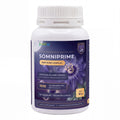
COGNIPRIME · Cognitive Longevity · 180 Capsules
A daily formula that combines lion's mane extract with citicoline and bacopa, among other ingredients, taken as six capsules a day with breakfast and lunch. In Chapters 3 and 4 we come back to what its lion's mane extract is, what it is not, and how to judge it fairly.
Add to cart · €89.95 →See full detailsOr pass the Final Master Quiz below first: 4 out of 5 unlocks your reader reward.
Both are interesting signals. Neither shows a lasting change, and a faster response a couple of hours after one dose is a long way from the slow, sixteen-week pattern reported in 2009.
Section 3
The Results That Found Little
Now the results that rarely make it into marketing.
In 2025, a team at the University of Surrey gave 18 healthy adults aged 18 to 35 a single 3 g dose of a concentrated lion's mane fruiting-body extract, or a placebo, on separate days. Ninety minutes later they measured a broad set of thinking skills and mood. On the combined measures of overall cognition and of mood there was no significant effect. One individual test, a pegboard task of fine hand coordination, improved. The authors concluded that any benefit may be specific to certain tasks.
In 2026, a small pilot study in Florida gave 10 healthy adults 2 g a day of a supplement made from lion's mane mycelium and fruiting body for 28 days. It measured executive function (attention, and switching between tasks) and blood levels of BDNF, a protein involved in the growth and upkeep of nerve cells. There were no statistically significant changes in either. The study compared people with themselves, before and after, rather than with a placebo group; the authors called it a proof-of-concept pilot.
Real study data · five trials
Lion's mane in healthy adults: small, short and mixed
Each card is one published trial, grouped by how long people took lion's mane. n = number of participants.
One dose
USA, 2023
1 g, crossover with placebo · n = 40
Faster reaction time on some tasks within 2 hours
UK, 2025
3 g of a 10:1 extract, crossover with placebo · n = 18
No change in overall cognition or mood; one hand-coordination task improved
28 days
UK, 2023
1.8 g a day, vs placebo · n = 43 (41 for 28 days)
Faster on the Stroop task 60 minutes after the first dose; lower stress only a trend (p = 0.051)
USA, 2026
2 g a day, no placebo group · n = 10
No significant change in executive function or BDNF
12 weeks
Japan, 2019
Fruiting-body supplement, vs placebo · middle-aged and older adults (n not given in the summary)
MMSE improved; two memory tests did not
At least one test improved · No overall or significant effect
Sources: references 2 to 6, as reported by their authors. Not shown: the 2009 trial in people with mild cognitive impairment (Chapter 1).
Most results in healthy adults are small, short-term or null, with a few signals on single tasks.
Put the healthy-adult trials side by side and a pattern appears. They are small (10 to 43 people where the number is reported), short (a single dose to 12 weeks), they use different products and doses, and they measure different things. Where they find something, it is usually one test among several.
Small, short and mixed: that is the honest summary of lion's mane trials in healthy adults.
That is not evidence that lion's mane does nothing. It is evidence that the effect in healthy people, if there is one, is modest and not yet pinned down.
Who runs these studies
Several of these trials involved companies. The 2009 trial was run from a mushroom producer's laboratory, and authors of the 2025 Surrey study list company affiliations. Industry involvement is common in nutrition research and does not make a result wrong, but it is one more reason to look for independent, larger trials.
Chapter 2 · 3 questions
Test Your Longevity IQ: Chapter 2 Quick Quiz
Question 1
In the 12-week 2019 trial, how many of three cognitive tests improved?
AAll three
BNone
CTwo
DOne
Reveal Answer
Correct Answer: D.
Only the MMSE improved compared with placebo. The visual memory test and the word-pair learning test did not show a significant difference.
Question 2
What did a 2023 pilot in young adults see 60 minutes after one dose?
AFaster performance on a Stroop task
BHigher IQ
CBetter sleep
DLower blood pressure
Reveal Answer
Correct Answer: A.
Participants were quicker on the Stroop task an hour after the first 1.8 g dose. After 28 days there was only a trend towards lower stress.
Question 3
What did a 2025 crossover trial find after a single 3 g dose?
ALarge memory gains
BNo overall effect on cognition or mood
CFaster reading
DWeight loss
Reveal Answer
Correct Answer: B.
The combined measures of cognition and mood did not change significantly. One individual task, a pegboard test, improved.
🔒 LOCKED: READER REWARD
There is a reader reward waiting at the end of this article.
Read the next two chapters closely. Score at least 4 out of 5 on the Final Master Quiz at the bottom of the page and you unlock the lion's mane trial scorecard: all six human trials from this article on one screen (who took part, the dose, how long, what changed and what didn't), plus a printable 12-week self-check.
Every answer is in the chapters you are reading…
[ Jump to the Final Master Quiz → ]Chapter 3 of 4
Why Mushrooms Are Hard to Compare
Imagine comparing two coffees by weight alone, without knowing that one is ground beans and the other a concentrated instant powder. That is roughly the problem with lion's mane. The trials in this article used dried whole mushroom, concentrated extracts and blends of different parts of the fungus. A gram of one is not a gram of another.
This chapter explains the three things that make lion's mane products hard to compare, and what they mean for reading a label, including ours.
Section 1
Fruiting Body or Mycelium
A mushroom has two main parts. The fruiting body is the part you see and cook: in lion's mane, the shaggy white globe. The mycelium is the network of fine threads that grows through wood or another growing medium, and from which the fruiting body emerges. Supplements can be made from either, or from a mix.
The two parts are chemically different. Reviews of lion's mane chemistry describe two families of compounds that interest brain researchers most: hericenones, found mainly in the fruiting body, and erinacines, found mainly in the mycelium. Both have been studied in the laboratory for their effects on nerve cells.
The 2009 and 2019 Japanese trials used fruiting body. The 2025 Surrey trial used a fruiting-body extract. The 2026 pilot used a mix of mycelium and fruiting body. So even before dose, the trials were not testing quite the same thing. The reviews reach a consistent conclusion: lion's mane supplements need better standardisation before results can be compared properly.
Section 2
What 5:1 Means, and What It Doesn't
Many labels give an extract ratio, such as 5:1 or 10:1. It describes how much raw material went into the extract: 5:1 means about five grams of dried mushroom were used to make one gram of extract.
What a ratio does not tell you is how much of any particular compound ended up in the extract. That depends on the starting material, the part of the mushroom and the extraction method. Two 5:1 extracts can differ a lot in what they contain.
A ratio tells you how much mushroom went in. It does not tell you what came out.
That makes simple comparisons misleading. The Surrey trial used 3 g of a 10:1 extract, which its authors describe as equivalent to about 30 g of fresh fruiting body. Fresh mushroom is mostly water, so that is a very different amount from 3 g of dried powder, and nobody can say from the label alone how the two compare. It found no overall effect after one dose. The 2009 trial used about three grams of dried powder a day for months and reported a gradual change. The number on the label is only part of the story; material and time matter too.
The same applies to our own formula, and we would rather say it plainly. COGNIPRIME contains 750 mg of a 5:1 lion's mane extract per daily serving. On paper that corresponds to about 3.75 g of mushroom material, but it is not the same material as the tablets in the 2009 trial, and our label does not state whether the extract comes from the fruiting body or the mycelium. So no one can say that COGNIPRIME reproduces the 2009 trial, and we don't.
Real doses, as published
Three lion's mane doses that cannot be compared gram for gram
What one dose actually contained, in the words of the paper or the label.
2009 trial (Japan) · per day, for 16 weeks
About 2.9 g of dried mushroom powder
Dried lion's mane powder in tablets (twelve 250 mg tablets, 96% powder). Not an extract.
2025 trial (UK) · one single dose
3 g of extract, described as equal to 30 g of fresh mushroom
A 10:1 fruiting-body extract. Fresh mushroom is mostly water, so 30 g fresh is far less than 30 g dried.
COGNIPRIME · per day
750 mg of a 5:1 extract
Made from about 3.75 g of mushroom material. The label does not state fruiting body or mycelium, or the content of any compound.
An extract ratio shows how much mushroom went in, not how much hericenone or erinacine came out, and it says nothing about the effect. Sources: references 1 and 5 and the COGNIPRIME label.
Same kind of number on a label, different material: why one gram of lion's mane is not another.
Section 3
The Lab Story
Why do researchers keep testing lion's mane at all? Mostly because of laboratory work. In cells and in animals, hericenones and erinacines have been reported to stimulate the release of nerve growth factor (NGF), a protein that helps nerve cells grow and survive. Other laboratory studies describe antioxidant and anti-inflammatory activity.
These findings are genuinely interesting, and they are why the human trials exist. But they come with two caveats. First, a compound acting on cells in a dish is not the same as that compound, swallowed in a capsule, reaching the human brain in useful amounts; how much does so in people is still unknown. Second, doses that work in animals rarely translate neatly to people.
So the lab work explains why lion's mane is plausible. Only human trials can show whether it does anything noticeable for people, and so far they point to modest effects, on some tasks, that last only while it is taken.
Chapter 3 · 3 questions
Test Your Longevity IQ: Chapter 3 Quick Quiz
Question 1
Where are hericenones mainly found, according to the reviews?
AThe mycelium
BThe fruiting body
CThe spores only
DNowhere
Reveal Answer
Correct Answer: B.
Reviews describe hericenones as mainly found in the fruiting body and erinacines mainly in the mycelium. Products made from different parts are therefore not interchangeable.
Question 2
What does an extract ratio like 5:1 describe?
AThe percentage of active compounds
BHow much raw material went into the extract
CThe daily dose
DThe study result
Reveal Answer
Correct Answer: B.
A 5:1 ratio means about five grams of dried mushroom went into one gram of extract. It says nothing about how much of any compound the extract contains.
Question 3
Where has nerve growth factor stimulation been shown?
AIn large human trials
BIn cells and animals
CIn blood tests of every user
DNowhere
Reveal Answer
Correct Answer: B.
NGF stimulation by lion's mane compounds comes from laboratory and animal research. How much of these compounds reaches the human brain is not known.
Chapter 4 of 4
How to Judge a While-You-Take-It Ingredient
If lion's mane has an effect, the trials suggest three things about it: it builds over weeks, it shows up on some tasks and not others, and it does not stay when you stop. That combination makes it easy to misjudge in both directions, by expecting too much on day three or by giving up too early. Here is how we would judge it.
Section 1
Months, Not Mornings
The trials that reported changes with regular use ran for 8 to 16 weeks: the 2009 group was ahead of placebo by week 8, and the 2019 trial lasted 12 weeks. The single-dose trials found, at most, small effects on some reaction-time tasks within hours, and one found no overall effect.
The practical lesson: a capsule taken this morning is unlikely to change how you think this afternoon, and one week of use tells you very little. If you try lion's mane, a fair test means consistent daily use for about three months. If the week-twenty result is a guide, skipping days or starting and stopping makes any effect harder to notice.
It also means that stopping is information. If you have taken it consistently for a few months and then stop, notice whether anything changes over the following weeks. That is, in miniature, the measurement the 2009 researchers made at week twenty.
Section 2
Write Down What You Expect
Brain-health supplements are easy to over-read. Everyone has sharp days and foggy days for reasons that have nothing to do with a capsule: sleep, stress, workload, a cold. A simple record keeps you honest.
- Pick one everyday task you care about. Remembering names, finding the right word, keeping track of a long book, staying focused through an afternoon meeting. One task, not five.
- Rate it once a week, on the same day, from 1 to 10: once before you start, then every week for 12 weeks. Add one line about anything unusual, such as a bad night, a stressful week or an illness.
- Look at the trend, not single weeks. One great week means little; a steady shift over two months means more.
- Run your own week-twenty check. If you decide to stop, keep rating for four more weeks. A change that fades when you stop is more convincing than one that doesn't.
This is not a clinical trial: you know what you are taking, and expectation plays a part. But it is far better than judging by how you feel on day three. The reader reward at the end of this article includes a printable version.

One task, one rating a week, twelve weeks: a simple record beats a first impression.
Section 3
Why COGNIPRIME Pairs Lion's Mane With Citicoline and Bacopa
Lion's mane is one ingredient in COGNIPRIME, not the whole formula. We built it as a single daily routine for adults who want to look after their thinking as they age, rather than as a lion's mane product.
Two of its other ingredients, citicoline (500 mg) and bacopa (300 mg), have their own trials in healthy older adults, which we covered in an earlier article, The Memory That Fades First.
No trial has tested this combination as a package, and we don't claim that it does what each ingredient did in its own studies. What the combination offers is practical: one routine, taken every day, which is exactly what a while-you-take-it ingredient needs. The daily serving is six capsules, split between breakfast and lunch, so a bottle of 180 capsules lasts 30 days.
The product behind this article
COGNIPRIME · Cognitive Longevity · 180 Capsules
For adults who want one daily, stimulant-free brain-health routine and are prepared to judge it over months, with a simple weekly record like the one above.
Add to cart · €89.95 →See full detailsOr pass the Final Master Quiz below first: 4 out of 5 unlocks your reader reward.
Section 4
Who It Suits, and Who It Doesn't
COGNIPRIME suits adults who want a daily, stimulant-free routine for brain health, who like knowing exactly what is in it, and who will give it the months that the research suggests any fair test needs.
It is not a treatment for memory loss or for any other condition. If you, or someone close to you, have noticed memory changes that worry you, see a doctor first. A check-up comes before any supplement, and no supplement should delay it.
If you take prescription medicines, are pregnant or breastfeeding, or have a medical condition, ask your doctor or pharmacist before starting any supplement, including this one.
And if you decide lion's mane is not for you, the useful lesson of this article still stands: judge any brain supplement over months, on one task you care about, and notice what happens when you stop.
Chapter 4 · 3 questions
Test Your Longevity IQ: Chapter 4 Quick Quiz
Question 1
Over what period did the trials that saw changes with regular use run?
AA single afternoon
B8–16 weeks
CTen years
DOne day
Reveal Answer
Correct Answer: B.
The 2009 trial showed a difference from week 8 to week 16, and the 2019 trial ran for 12 weeks. Single doses mostly showed small or no effects.
Question 2
What does this chapter suggest before starting any brain supplement?
ANote one everyday task and rate it weekly
BTake double the dose
CStop after a week
DCombine it with caffeine
Reveal Answer
Correct Answer: A.
Pick one task you care about, rate it weekly for 12 weeks, and keep rating for four weeks if you stop. The trend matters more than single weeks.
Question 3
How many COGNIPRIME capsules make a daily serving?
ATwo
BSix, split between breakfast and lunch
COne
DTwelve
Reveal Answer
Correct Answer: B.
The daily serving is six capsules, split between breakfast and lunch. A bottle of 180 capsules lasts 30 days.
THE FINAL MASTER QUIZ
Does your knowledge last past week twenty?
You now know what the 2009 trial measured after the last tablet, what happened in healthy adults, why mushroom products are hard to compare by the milligram, and how to judge an ingredient that works, if at all, while you take it. Let's see what stuck.
🎁 Get 4 out of 5 correct, and your Reader Reward unlocks instantly below.
Full article · 5 questions
Question 1
In the 2009 trial, what happened four weeks after people stopped taking lion's mane?
Reveal Answer
Correct Answer: C.
At week twenty the lion's mane group's scores had decreased significantly. An effect, if real, that needs continued intake.
Question 2
What did a 2023 pilot see 60 minutes after one dose?
Reveal Answer
Correct Answer: A.
Young adults were quicker on the Stroop task an hour after a 1.8 g dose. The 28-day results were weaker.
Question 3
What did a 2025 trial find after a single 3 g dose?
Reveal Answer
Correct Answer: D.
The combined cognition and mood measures did not change significantly; only a pegboard task improved.
Question 4
Why can't you compare 750 mg of a 5:1 extract directly with 3 g of dried mushroom?
Reveal Answer
Correct Answer: B.
A ratio says how much mushroom went in, not what came out, and fruiting body and mycelium differ in their compounds.
Question 5
What is the fairest way to judge a while-you-take-it ingredient?
Reveal Answer
Correct Answer: C.
Consistent daily use for about three months, a weekly rating of one task, and four more weeks of rating if you stop.
0 of 5 answered
🔒 LOCKED: YOUR READER REWARD🎁 UNLOCKED: YOUR READER REWARD
You now know what most lion's mane marketing leaves out: in the trial quoted most often, scores rose while people took it and fell four weeks after they stopped, and the newer trials in healthy adults are small, short and mixed.
So here is a thank-you for reading this far.
THE REWARD: THE LION'S MANE TRIAL SCORECARD: all six human trials from this article on one screen, plus a printable 12-week self-check with its own week-twenty test.
••••••••••
🔒 Pass the Final Master Quiz to unlock your reward.
Score at least 4 out of 5 and your reward appears here instantly.
The lion's mane trial scorecard
Six human trials, as their authors reported them. Full citations are in the reference list below. Scroll sideways on a phone.
| Trial | Who | Dose & length | What changed | What didn't |
|---|---|---|---|---|
| Japan, 2009 | 30 adults aged 50–80 with mild cognitive impairment | About 3 g/day dried fruiting body, 16 weeks | Scores above placebo at weeks 8, 12 and 16 | Scores fell significantly 4 weeks after stopping |
| Japan, 2019 | Middle-aged and older adults (number not in the summary) | Fruiting-body supplement, 12 weeks | MMSE improved | Shape memory and word-pair learning: no significant difference |
| UK, 2023 | 43 healthy adults aged 18–45 (41 completed 28 days) | 1.8 g/day, 28 days | Faster Stroop 60 min after the first dose | Stress only a trend (p = 0.051); other null findings |
| USA, 2023 | 40 healthy adults aged 18–50, crossover (each tried all arms) | Single 1 g dose | Faster reaction time on some tasks within 2 h | Effects limited to some tasks |
| UK, 2025 | 18 healthy adults aged 18–35, crossover | Single 3 g dose of a 10:1 fruiting-body extract | Pegboard (hand coordination) at 90 min | No overall effect on cognition or mood |
| USA, 2026 | 10 healthy adults aged 18–55, no placebo | 2 g/day mycelium + fruiting body, 28 days | Small, non-significant shifts | No significant change in executive function or BDNF |
Your 12-week self-check
Task I am rating: ______________________. Rate it from 1 to 10 on the same day each week. If you stop, keep going for four more weeks: that is your week-twenty check. Print this page or take a screenshot.
| Week | Rating (1–10) | Anything unusual? |
|---|---|---|
| Before you start | ||
| Week 1 | ||
| Week 2 | ||
| Week 3 | ||
| Week 4 | ||
| Week 5 | ||
| Week 6 | ||
| Week 7 | ||
| Week 8 | ||
| Week 9 | ||
| Week 10 | ||
| Week 11 | ||
| Week 12 | ||
| Stopped + 1 week | ||
| Stopped + 2 weeks | ||
| Stopped + 3 weeks | ||
| Stopped + 4 weeks |
Or read about citicoline and bacopa first →
This reward is information only: it has no code and does not change any price. Current prices are shown on the product page and in your cart.
★4.7 Judge.me | ★4.8 Trustpilot | ★4.6 Loox
600+ verified reviews | 91% would recommend | Top 10% Store on Judge.me
Disclaimer: These statements have not been evaluated by the FDA or the EFSA. This product is not intended to diagnose, treat, cure, or prevent any disease. Individual results may vary. Consult a healthcare professional before starting any supplement regimen.
Complete Reference List
Lion's mane in people
1.Mori K, Inatomi S, Ouchi K, Azumi Y, Tuchida T. Improving effects of the mushroom Yamabushitake (Hericium erinaceus) on mild cognitive impairment: a double-blind placebo-controlled clinical trial. Phytother Res. 2009;23(3):367–372. PMID 18844328. (30 adults aged 50–80, about 3 g/day for 16 weeks plus a 4-week follow-up after stopping.) DOI: 10.1002/ptr.2634
2.Saitsu Y, Nishide A, Kikushima K, Shimizu K, Ohnuki K. Improvement of cognitive functions by oral intake of Hericium erinaceus. Biomed Res. 2019;40(4):125–131. PMID 31413233. (12 weeks, fruiting body; MMSE, Benton and verbal paired-associate tests.) DOI: 10.2220/biomedres.40.125
3.Docherty S, Doughty FL, Smith EF. The acute and chronic effects of lion's mane mushroom supplementation on cognitive function, stress and mood in young adults: a double-blind, parallel groups, pilot study. Nutrients. 2023;15(22):4842. PMID 38004235. (43 adults aged 18–45 randomised, 41 completed; 1.8 g/day, 28 days.) DOI: 10.3390/nu15224842
4.La Monica MB, Raub B, Ziegenfuss EJ, et al. Acute effects of naturally occurring guayusa tea and Nordic lion's mane extracts on cognitive performance. Nutrients. 2023;15(24):5018. PMID 38140277. (Crossover, single 1 g dose.) DOI: 10.3390/nu15245018
5.Surendran G, Saye J, Binti Mohd Jalil S, et al. Acute effects of a standardised extract of Hericium erinaceus (lion's mane mushroom) on cognition and mood in healthy younger adults: a double-blind randomised placebo-controlled study. Front Nutr. 2025;12:1405796. PMID 40276537. (Crossover, 18 adults aged 18–35, single 3 g dose of a 10:1 extract.) DOI: 10.3389/fnut.2025.1405796
6.Evans C, Kalman D, Goodrich J, et al. A pilot proof-of-concept study to evaluate the physiological and cognitive impacts of Hericium erinaceus on healthy adults. Nutrients. 2026;18(19):3177. PMID 42884628. (10 adults aged 18–55, 2 g/day for 28 days, no placebo group.) DOI: 10.3390/nu18193177
Chemistry and laboratory research
7.Szućko-Kociuba I, Trzeciak-Ryczek A, Kupnicka P, Chlubek D. Neurotrophic and neuroprotective effects of Hericium erinaceus. Int J Mol Sci. 2023;24(21):15960. PMID 37958943. (Review; laboratory and animal research.) DOI: 10.3390/ijms242115960
8.Contato AG, Conte-Junior CA. Lion's mane mushroom (Hericium erinaceus): a neuroprotective fungus with antioxidant, anti-inflammatory, and antimicrobial potential. A narrative review. Nutrients. 2025;17(8):1307. PMID 40284172. (Narrative review.) DOI: 10.3390/nu17081307
