





A Tenth of a Diet: What Twenty Years of Alpine Food Records Linked to Spermidine, and Why the Best-Known Trial Gave So Little

Chapter 1
A Town That Wrote Down Its Dinners
In 1995, in Bruneck, a small town in the South Tyrol, a dietitian sat down with each of several hundred local adults and asked them, item by item, what they usually ate. Bread, apples, pears, salad, potatoes, cheese, coffee. Five years later the dietitians came back and asked again. Then again in 2005, and again in 2010.
Nobody involved was looking for a supplement. The Bruneck Study was set up to understand ageing and blood-vessel health in an ordinary Alpine population. But two decades of carefully repeated food records turned out to be exactly what researchers needed to test a question that, until then, had only been asked in laboratory animals.
The question was about spermidine, a small molecule found in every living cell and in many everyday foods. In several animal models, the Bruneck authors note, giving spermidine has been linked to longer survival. Would people who simply ate more of it, year after year, look any different twenty years later?
The answer that came back in 2018 was striking enough to start an industry. The fine print is what this article is about: the amount of spermidine those people ate, and how little of it the most famous supplement trial went on to give.
In this article we follow the numbers in order. First the town and what its records showed. Then the plate: which foods supplied the spermidine and how many milligrams that adds up to. Then the year-long trial that is often quoted as proof that spermidine does nothing. And finally the short, higher-dose studies that asked where swallowed spermidine actually goes.
Section 1
829 People, Four Food Questionnaires
The analysis, published in the American Journal of Clinical Nutrition in 2018, included 829 adults aged 45 to 84, almost exactly half of them men. Diet was assessed by trained dietitians using a validated food-frequency questionnaire: a detailed, structured interview about how often, and how much, a person eats of each food.
Because the interview was repeated in 1995, 2000, 2005 and 2010, the team had 2,540 separate diet assessments to work with. That matters. A single snapshot of someone's diet is noisy; four snapshots across fifteen years give a much steadier picture of how a person actually eats.
The researchers then calculated the spermidine in each diet from food composition data and followed everyone until 2015. Over those twenty years, 341 participants died, which gave the study enough events to compare people who ate more spermidine with people who ate less.
| Detail | Bruneck Study (spermidine analysis) |
|---|---|
| Who | 829 adults aged 45 to 84, from the general population of Bruneck, South Tyrol |
| How diet was measured | Dietitian-led food-frequency questionnaires in 1995, 2000, 2005 and 2010 (2,540 assessments) |
| Follow-up | 20 years, 1995 to 2015 |
| Deaths during follow-up | 341 |
| Second cohort used to check the result | SAPHIR study, Salzburg, Austria |
| Type of study | Prospective observational cohort (it can show a link, not prove cause) |

Four rounds of food questionnaires over fifteen years gave the Bruneck team an unusually steady picture of what people ate.
Section 2
Twenty Years Later: The Survival Gap
The researchers split participants into three equal groups by how much spermidine they ate. In the lowest third, there were 40.5 deaths per 1,000 person-years. In the middle third, 23.7. In the highest third, 15.1.
Those raw numbers do not account for age, sex or total calories, so the authors adjusted for them, and then went further: they added lifestyle factors, known predictors of mortality and other features of the diet. After all that, each step up in spermidine intake (one standard deviation) still went with roughly a quarter lower risk of death over the follow-up (hazard ratio 0.76).
To make the size of the gap easier to grasp, the authors translated it into age. The difference in risk between the top and bottom thirds was similar to being 5.7 years younger.
Then they did something that strengthens any observational finding: they checked it in a second, independent group of people. In the SAPHIR study in Salzburg, Austria, higher spermidine intake pointed the same way (hazard ratio 0.71 per standard deviation).
In plain words
In two Austrian-Italian populations, people whose ordinary diet contained more spermidine tended to live longer over the following years, even after the researchers accounted for many other differences between them.
Section 3
What a Cohort Can and Cannot Tell You
A cohort study like Bruneck watches people; it does not assign them anything. That is its strength, because it captures real lives over real decades, and its limit, because people who eat more whole grains, fruit and salad may differ in many other ways.
The authors were candid about this. They wrote that residual confounding and measurement error cannot be ruled out, that diet was self-reported, and that all participants were white. They also stressed that their results reflect spermidine intake at the levels found in a Western diet, and that they do not readily extend to high-dose supplements. Confirmation, they said, would need trials.
Keep that sentence in mind, because it sets up the rest of this article. The Bruneck finding was about a level of intake, measured in milligrams per day, sustained for years. So the obvious next question is: how many milligrams?
Chapter 1 · 3 questions
Test Your Longevity IQ: Chapter 1 Quick Quiz
Question 1
How many adults were included in the Bruneck spermidine analysis?
82
829
8,290
82,900
Reveal Answer
Correct Answer: B.
829 adults aged 45 to 84 took part. Their diets were assessed four times between 1995 and 2010.
Question 2
How was diet measured in Bruneck?
Blood spermidine tests
Meal photographs
Supermarket receipts
Repeated dietitian-led food-frequency questionnaires
Reveal Answer
Correct Answer: D.
Trained dietitians repeated a validated food-frequency questionnaire in 1995, 2000, 2005 and 2010, giving 2,540 assessments.
Question 3
Which second cohort showed the same direction of result?
SAPHIR, in Salzburg
UK Biobank
Framingham
None, it was never checked
Reveal Answer
Correct Answer: A.
The authors checked their finding in the SAPHIR study in Salzburg, Austria, where higher spermidine intake pointed the same way.
Chapter 2
Where the Spermidine Came From
If you picture a spermidine-rich diet as something exotic, Bruneck's records will surprise you. The foods that supplied most of the spermidine were among the most ordinary on any European table.
Section 1
The Plate: Five Everyday Sources
From the full paper, the five biggest contributors to spermidine intake in Bruneck were whole grains (13.4%), apples and pears (13.3%), salad (9.8%), vegetable sprouts (7.3%) and potatoes (6.4%). Together those five supplied about half of the total.
There is no single superfood in that list. Spermidine is spread thinly across many foods, so a diet only becomes high in it through steady, daily habits: bread made from whole grain rather than white flour, fruit most days, a salad with meals, potatoes as a staple.
| Food group | Share of spermidine intake in Bruneck |
|---|---|
| Whole grains | 13.4% |
| Apples and pears | 13.3% |
| Salad | 9.8% |
| Vegetable sprouts | 7.3% |
| Potatoes | 6.4% |

Whole grains, apples and pears, salad, sprouts and potatoes: about half of the spermidine in Bruneck's diets.
Section 2
In Milligrams: The Three Thirds
The study reported intake in micromoles per day. Converted to milligrams (our arithmetic, using spermidine's molecular weight, so read the figures as approximate), the three groups looked like this:
| Group | Spermidine from food per day | Deaths per 1,000 person-years |
|---|---|---|
| Lowest third | under 62.2 µmol, about 9 mg or less | 40.5 |
| Middle third | 62.2 to 79.8 µmol, about 9 to 11.6 mg | 23.7 |
| Highest third | over 79.8 µmol, more than about 11.6 mg | 15.1 |
Two things stand out. First, the gaps between the groups are only a few milligrams a day. Second, everyone in Bruneck was eating several milligrams of spermidine every day simply from food. In the SAPHIR cohort, the typical (geometric mean) intake was about 74.5 µmol, roughly 10.8 mg a day.
The human link was found at the scale of a whole diet: roughly 9 to 12 milligrams a day, every day, for years.
Section 3
Why “Diet Level” Matters
This is the number most summaries leave out, and it changes how you should read everything that follows. When a study is described as testing "spermidine", the first question to ask is how much, compared with what people already eat.
A supplement that adds a small fraction of a milligram is not testing the Bruneck finding. A supplement that adds an amount comparable to a day's food intake is at least in the right range, although no long-term trial has yet tested that level against placebo. That gap between observation and trial is the honest state of the evidence today.
If you want to look at your own plate, the Bruneck list is a practical starting point: whole-grain bread instead of white, an apple or a pear a day, salad and sprouts with meals, potatoes as a staple. None of it is unusual. What made the difference in Bruneck was consistency.
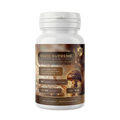
The compound in this article, in a daily serving

Pure Spermidine · 60 Capsules
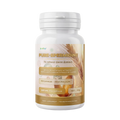
Each two-capsule serving provides 10 mg of spermidine from 1,000 mg of wheat germ extract standardised to 1%. That is about the amount the typical SAPHIR participant ate from food in a whole day. 60 vegan capsules: a 30-day supply at two capsules a day.
Who it suits: adults whose meals are light on whole grains, fruit, salad and sprouts, and who want a steady daily amount in the range people in these cohorts ate, taken consistently for months.
The cohorts in this article measured spermidine from food; no long-term trial has yet tested a 10 mg daily supplement against placebo. Contains wheat and gluten.
Add to cart · €74.95 →See full detailsOr pass the Final Master Quiz below first: 4 out of 5 unlocks your reader reward.
Chapter 2 · 3 questions
Test Your Longevity IQ: Chapter 2 Quick Quiz
Question 1
Roughly how much spermidine did the highest third in Bruneck eat from food each day?
Under 1 mg
About 3 mg
More than about 11.6 mg
About 100 mg
Reveal Answer
Correct Answer: C.
The highest third ate more than 79.8 µmol a day, which is more than about 11.6 mg. The lowest third ate about 9 mg or less.
Question 2
Which of these was NOT among the top five spermidine sources in Bruneck?
Potatoes
Salad
Vegetable sprouts
Sugar
Reveal Answer
Correct Answer: D.
The top five were whole grains, apples and pears, salad, vegetable sprouts and potatoes.
Question 3
Why did the authors say their result does not readily extend to high-dose supplements?
It reflects intake at Western-diet levels
It was done in mice
The study lasted one week
Nobody in Bruneck ate grains
Reveal Answer
Correct Answer: A.
The cohort measured spermidine at the levels found in an ordinary Western diet, so the authors said it does not automatically apply to supplements at other doses.
🔒 LOCKED: READER REWARD
There is a reader reward waiting at the end of this article.
Read the next two chapters closely. Score at least 4 out of 5 on the Final Master Quiz at the bottom of the page and you unlock a 24-hour head start on our biggest event of the year: registered readers get in a full day before everyone else.
Every answer is in the chapters ahead…
[ Jump to the Final Master Quiz → ]Chapter 3
The Trial That Gave a Tenth
If you have read anything sceptical about spermidine, it probably cited one study: the SmartAge trial from Berlin. It is a good trial, carefully run and honestly reported. It is also a trial that gave its volunteers about a tenth of what they were already eating.
Section 1
SmartAge: Who, What and How Long
SmartAge was a 12-month, randomised, double-blind, placebo-controlled phase 2b trial run at an academic research centre in Germany between 2017 and 2020 and published in JAMA Network Open in 2022.
It enrolled 100 adults aged 60 to 90 who had noticed their memory slipping but had no diagnosis (researchers call this subjective cognitive decline). Half took a spermidine-rich supplement made from wheat germ every day; half took a placebo of microcrystalline cellulose. 89% completed the full year.
The daily spermidine dose was 0.9 mg.
| Detail | SmartAge trial |
|---|---|
| Who | 100 adults aged 60 to 90 with subjective memory complaints |
| Design | Randomised, double-blind, placebo-controlled, phase 2b |
| Length | 12 months |
| Daily spermidine dose | 0.9 mg, from a wheat germ extract |
| Main outcome | Change in memory performance (mnemonic discrimination) |
Section 2
The Result, Read Fairly
Over twelve months, the spermidine group did not improve on the main memory test compared with placebo, and the secondary outcomes did not change either. Adverse events were similar in both groups.
The authors also reported exploratory analyses that hinted at possible benefits on verbal memory and on inflammation markers. Exploratory means these were not the questions the trial was designed to answer, so they cannot be taken as findings. The authors wrote that these hints need to be tested in future studies at higher dosage.
That last phrase is the researchers' own conclusion, and it is the bridge to the arithmetic.
Section 3
The Arithmetic: A Tenth of a Normal Day
Put the two studies side by side. In Bruneck, even the lowest third ate up to about 9 mg of spermidine a day from food, and the highest third ate more than about 11.6 mg. SmartAge added 0.9 mg a day.
0.9 mg on top of a diet that already supplies roughly 9 to 12 mg is an extra of about a tenth. A year-long trial at that dose was never going to test the difference between Bruneck's lowest and highest thirds.
None of this makes SmartAge a bad study. It answered the question it asked: does a low-dose wheat germ supplement improve memory in older adults over a year? The answer was no. What it did not ask, and could not answer, is whether a diet-level amount of spermidine, taken for years, makes a difference.

A teaspoon next to a full bowl: the trial dose was about a tenth of what an ordinary diet already supplies.
What this chapter can and cannot tell you
SmartAge is the longest placebo-controlled spermidine trial in people so far, and at 0.9 mg a day it found no memory benefit. It tells us little about doses in the range people eat from food, because it did not test them.
Chapter 3 · 3 questions
Test Your Longevity IQ: Chapter 3 Quick Quiz
Question 1
What was SmartAge's daily spermidine dose?
0.09 mg
0.9 mg
9 mg
90 mg
Reveal Answer
Correct Answer: B.
Participants took a wheat germ supplement providing 0.9 mg of spermidine a day, about a tenth of what a typical diet supplies.
Question 2
How long did the SmartAge trial run?
4 weeks
3 months
12 months
5 years
Reveal Answer
Correct Answer: C.
It was a 12-month randomised, placebo-controlled trial.
Question 3
What did the SmartAge authors suggest for future studies?
Shorter trials
Testing at higher dosage
Injections only
Only animal studies
Reveal Answer
Correct Answer: B.
They wrote that the exploratory hints on verbal memory and inflammation need validating in future studies at higher dosage.
Chapter 4
Higher Doses, and Where Spermidine Goes
If the trial dose was too small, the next obvious step is to give more and measure what happens. Two short studies did exactly that, and the first one produced a result nobody expected.
Section 1
15 mg: Spermine, Not Spermidine
In a study published in Nutrients in 2023, researchers in Greifswald and Lübeck gave 12 healthy adults 15 mg of spermidine a day for 5 days, and a placebo for another 5 days, with a 9-day break in between. Neither the volunteers nor the researchers knew which phase was which. It was the first pharmacokinetic study of oral spermidine: a study of where a swallowed compound shows up in the body.
Blood spermidine did not rise. Neither did putrescine, a related molecule. What did rise, significantly, was spermine, spermidine's larger chemical relative. Saliva levels did not change.
The authors' interpretation is that swallowed spermidine is largely converted into spermine before it reaches the circulation, and that some of the effects attributed to spermidine may in part come from spermine. They also wrote that, in their view, doses below 15 mg a day are unlikely to have short-term effects.
That is a frank statement, and it deserves a frank reading. The study measured blood levels over five days in twelve young, healthy volunteers. It tells us that blood spermidine is not a good place to look for a quick signal. It does not tell us what decades of diet-level intake do, which is the question Bruneck raised.
Section 2
40 mg for 28 Days: Well Tolerated, Little Change
A second study, published in Nutrition Research in 2024, pushed the dose much higher. 37 healthy men aged 50 to 70 took 40 mg a day of a high-purity synthetic spermidine (spermidine trihydrochloride) or placebo, for 7 and 28 days, in a double-blind, within-subject design.
The headline was safety. There were no significant changes in clinical, lipid, blood chemistry or blood-count measures compared with placebo, compliance was high, and no adverse events related to the supplement were reported. Serum and urine polyamine levels did not change substantially, which the authors read as the body keeping its polyamine levels under tight control.
| Study | Who and how long | Daily dose | What was found |
|---|---|---|---|
| SmartAge (2022) | 100 adults aged 60 to 90, 12 months | 0.9 mg (wheat germ) | No memory benefit vs placebo; exploratory hints need higher-dose testing |
| Greifswald/Lübeck (2023) | 12 healthy adults, 5-day phases | 15 mg | Blood spermine rose; blood spermidine did not |
| Nutrition Research (2024) | 37 healthy men aged 50 to 70, up to 28 days | 40 mg (synthetic) | Well tolerated; little change in circulating polyamines |

Three doses, three different questions: a year at 0.9 mg, five days at 15 mg, four weeks at 40 mg.
Section 3
What This Means for You
Put the four studies together and a clear, honest picture emerges.
The human link is at diet level. The Bruneck and SAPHIR cohorts connected higher spermidine intake from ordinary food with longer survival, at intakes of roughly 9 to 12 mg a day sustained for years. That is an association, not proof of cause.
The best-known trial tested a tenth of that. SmartAge's null result at 0.9 mg a day says little about diet-level amounts.
Higher doses are well tolerated over weeks, and the body regulates its levels tightly. Blood spermidine is not a quick read-out, and some of what spermidine does may run through spermine.
The open question is long-term, diet-level intake. No trial has yet tested about 10 mg a day against placebo for a year or more. Until one does, the most evidence-aligned approach is the one Bruneck's records point to: eat the foods that supply spermidine, consistently.
If your meals are light on whole grains, fruit, salad and sprouts, a daily supplement can bring the spermidine in your routine into the range these cohorts observed. That is the role of Pure Spermidine: 10 mg per two-capsule serving from wheat germ, about what the typical SAPHIR participant ate from food in a day. We would describe it as a way to reach diet-level intake, not as a shortcut past it, and as something to judge over months, not days.
Before you start
Pure Spermidine is made from wheat germ and contains wheat and gluten. If you are pregnant, breastfeeding, taking medicines or managing a health condition, speak to your doctor or pharmacist first.
Chapter 4 · 3 questions
Test Your Longevity IQ: Chapter 4 Quick Quiz
Question 1
In the 15 mg study, which polyamine rose in the blood?
Spermidine
Putrescine
Spermine
None of them
Reveal Answer
Correct Answer: C.
Spermine rose significantly while spermidine and putrescine did not, suggesting spermidine is converted before it reaches the circulation.
Question 2
How long did each 15 mg phase last?
5 days
5 weeks
5 months
5 years
Reveal Answer
Correct Answer: A.
Each intervention phase lasted 5 days, with a 9-day washout between spermidine and placebo.
Question 3
What did the 40 mg study find?
A large rise in blood spermidine
Clear memory gains
It was stopped early for side effects
It was well tolerated, with little change in circulating polyamines
Reveal Answer
Correct Answer: D.
40 mg a day for up to 28 days caused no significant changes in safety measures and only small changes in serum and urine polyamines.
THE FINAL MASTER QUIZ
Did you follow the dose?
You now know what twenty years of Bruneck food records linked to spermidine, where that spermidine came from, how little the best-known trial supplied, and what happened at higher doses. Let's see what stuck.
🎁 Get 4 out of 5 correct, and your Reader Reward unlocks instantly below.
Full article · 5 questions
Question 1
How long did the Bruneck follow-up last?
Reveal Answer
Correct Answer: C.
Participants were followed from 1995 to 2015: twenty years, with diet assessed four times along the way.
Question 2
The risk gap between Bruneck's top and bottom thirds was similar to being how much younger?
Reveal Answer
Correct Answer: B.
The authors translated the difference in risk into age: similar to being 5.7 years younger.
Question 3
Which pair of food groups supplied the most spermidine in Bruneck?
Reveal Answer
Correct Answer: A.
Whole grains (13.4%) and apples and pears (13.3%) were the two biggest sources.
Question 4
Compared with a normal diet, SmartAge's 0.9 mg daily dose added about…
Reveal Answer
Correct Answer: A.
A diet that already supplies roughly 9 to 12 mg a day plus 0.9 mg is an extra of about a tenth.
Question 5
In the 15 mg study, which polyamine rose in the blood?
Reveal Answer
Correct Answer: B.
Spermine rose while spermidine did not, which suggests swallowed spermidine is converted before reaching the circulation.
0 of 5 answered
🔒 LOCKED: YOUR 24-HOUR HEAD START🎁 UNLOCKED: YOUR 24-HOUR HEAD START
You now know what most summaries skip: the human link to spermidine was found at the scale of a whole diet, the best-known trial gave about a tenth of that, and the higher-dose studies showed where swallowed spermidine goes.
So here is a thank-you for reading this far.
THE REWARD: A 24-HOUR HEAD START on our biggest event of the year. Registered readers get in a full day before everyone else. Registration is free, takes ten seconds, and we email you when your early access begins.

••••••••••
🔒 Pass the Final Master Quiz to unlock your head start.
Score at least 4 out of 5 and your registration link appears here instantly.
Register below and we will email you the moment your early access opens.
Or read about Pure Spermidine first →
Early access is free and open to registered readers; the event's terms are shown on the registration page and in your confirmation email. This reward has no code and does not change any price.
★4.7 Judge.me | ★4.8 Trustpilot | ★4.6 Loox
600+ verified reviews | 91% would recommend | Top 10% Store on Judge.me
Disclaimer: These statements have not been evaluated by the FDA or the EFSA. This product is not intended to diagnose, treat, cure, or prevent any disease. Individual results may vary. Consult a healthcare professional before starting any supplement regimen.
Complete Reference List
The Bruneck cohort
Kiechl S, Pechlaner R, Willeit P, et al. Higher spermidine intake is linked to lower mortality: a prospective population-based study. Am J Clin Nutr. 2018;108(2):371–380. PMID 29955838. (Prospective cohort, 829 adults, 20-year follow-up; validated in the SAPHIR cohort.) DOI: 10.1093/ajcn/nqy102
Spermidine supplementation trials
Schwarz C, Benson GS, Horn N, et al. Effects of spermidine supplementation on cognition and biomarkers in older adults with subjective cognitive decline: a randomized clinical trial. JAMA Netw Open. 2022;5(5):e2213875. PMID 35616942. (SmartAge, 12-month randomised placebo-controlled trial, 100 adults, 0.9 mg/day.) DOI: 10.1001/jamanetworkopen.2022.13875
Senekowitsch S, Wietkamp E, Grimm M, et al. High-dose spermidine supplementation does not increase spermidine levels in blood plasma and saliva of healthy adults: a randomized placebo-controlled pharmacokinetic and metabolomic study. Nutrients. 2023;15(8):1852. PMID 37111071. (Crossover, 12 healthy adults, 15 mg/day for 5 days.) DOI: 10.3390/nu15081852
Keohane P, Everett JR, Pereira R, Cook CM, Blonquist TM, Mah E. Supplementation of spermidine at 40 mg/day has minimal effects on circulating polyamines: an exploratory double-blind randomized controlled trial in older men. Nutr Res. 2024;132:1–14. PMID 39405978. (37 healthy men aged 50–70, up to 28 days.) DOI: 10.1016/j.nutres.2024.09.012
